What makes Hokkaido heritage wheat different for bread baking
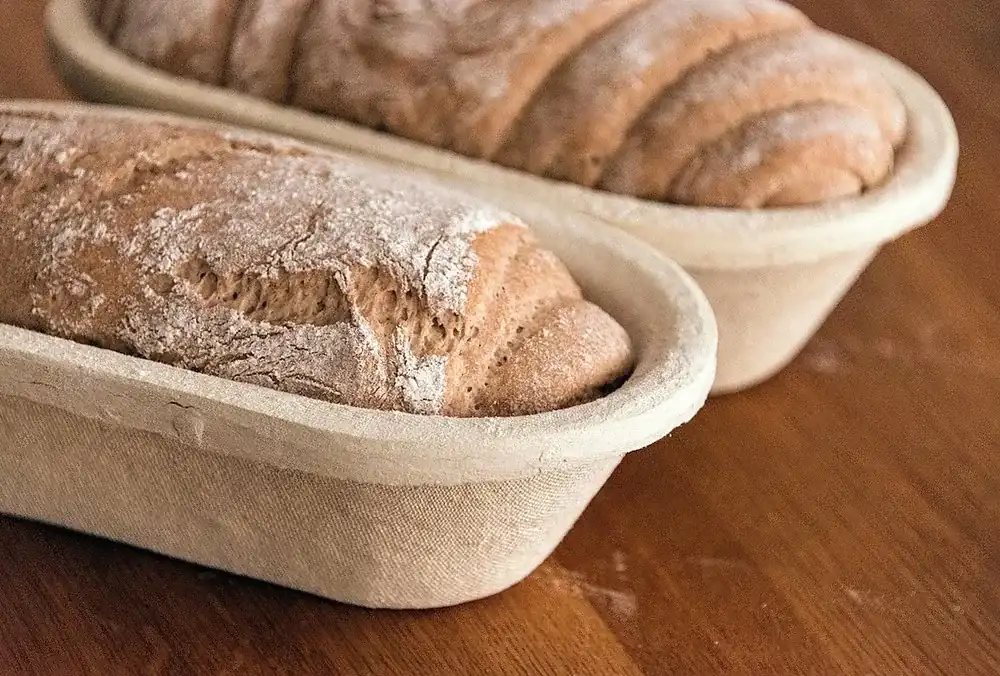
Japan imports a large proportion of its bread wheat, mostly from North America and Australia. But Hokkaido has been growing its own wheat varieties for over a century, and in the last decade a small number of farmers and millers have been reviving older varieties that were largely abandoned when industrial baking demanded uniformity. For sourdough baking, these heritage varieties offer something that imported flour often does not: a flavour that is worth tasting on its own.
Protein content and gluten structure
Standard Japanese bread flour (強力粉) typically has a protein content of around 11.5 to 12.5 percent, which gives it a strong, elastic gluten network suitable for commercial bread production. Hokkaido heritage wheat varieties tend to have slightly lower protein content, often in the 10 to 11 percent range, which produces a more extensible, less elastic dough. For sourdough, this is often an advantage: the dough is easier to shape and the crumb tends to be more open because the gluten network is less resistant to expansion during fermentation.
The trade-off is that lower-protein doughs are more sensitive to over-fermentation. A dough made with heritage wheat that has been in bulk fermentation for an hour too long will be noticeably slacker and harder to shape than one made with standard bread flour. This is why fermentation timing matters more when working with these flours.
Flavour differences
The flavour difference between heritage wheat and standard bread flour is subtle but real. Heritage varieties tend to have a slightly sweeter, more complex base flavour, with faint notes of grain that are more pronounced in the crust than in the crumb. This is partly because the bran and germ are more intact in stone-milled heritage flour, and partly because the varieties themselves have different starch and sugar compositions than modern high-yield wheat.
At Pixel Crown, the country loaf uses Hokkaido heritage wheat as its primary flour, with a small percentage of in-house stone-milled whole grain. The difference is most noticeable in the crust, which has a slightly deeper, more complex flavour than a loaf made entirely from standard bread flour.
Where to find it
Hokkaido heritage wheat flour is available from a small number of specialty baking suppliers in Japan, both online and in larger cities. It is worth looking for flour that specifies the variety name rather than just 'Hokkaido wheat', as the variety makes a significant difference to the baking characteristics. Stone-milled versions are available but tend to be more expensive and have a shorter shelf life due to the higher fat content from the germ.
If you are curious about the specific flour used at Pixel Crown, the baking workshop includes a tasting of the raw flour alongside the finished bread, which makes the flavour differences easier to understand.