How to store sourdough bread in a Japanese home
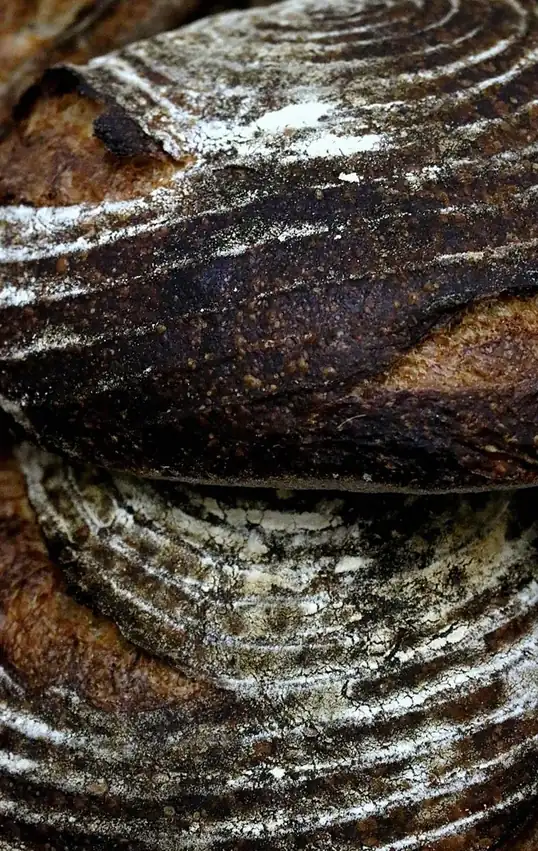
Japan's climate is not kind to bread. High humidity in summer accelerates mould, and the dry heat of winter air conditioning dries a loaf out within a day. Sourdough, because it contains no preservatives and has a more open crumb than commercial bread, is particularly sensitive to storage conditions. Getting this right means the difference between a loaf that is still good on day three and one that is stale or mouldy by the next morning.
Room temperature storage
The best container for a sourdough loaf at room temperature is a clean cotton cloth or a paper bag, not a plastic bag. Plastic traps moisture against the crust and turns it soft and leathery within a few hours. A cotton cloth allows the crust to breathe while protecting the cut surface from drying out. Place the loaf cut-side down on the cloth and wrap loosely.
In summer in Nagoya, where humidity can exceed 80 percent, even a well-wrapped loaf can develop surface mould within two days. If you are not going to finish the loaf within 48 hours in summer, it is better to slice and freeze the remainder immediately rather than waiting to see if it keeps.
Freezing and reheating
Sourdough freezes well. Slice the loaf before freezing so you can take out individual pieces as needed. Wrap slices in pairs in baking paper, then place them in a zip-lock bag with as much air removed as possible. Frozen slices keep well for up to six weeks without significant flavour loss.
To reheat, place frozen slices directly in a toaster or toaster oven without thawing. The crust will crisp up and the crumb will warm through in three to four minutes. If you want to reheat a larger portion, wrap it loosely in foil and place it in an oven at 180°C for 10 to 12 minutes, then remove the foil for the last two minutes to re-crisp the crust.
What not to do
Refrigerating a whole sourdough loaf is the most common storage mistake. The refrigerator temperature accelerates starch retrogradation, the process by which the crumb becomes dry and crumbly, much faster than room temperature storage does. A loaf stored in the refrigerator for 24 hours will be noticeably staler than one kept at room temperature in a cloth. The refrigerator is useful for extending the life of a very ripe loaf by a day, but it is not a good long-term storage solution.
The rye and malt loaf is the most forgiving of the Pixel Crown range when it comes to storage: its denser crumb and lower hydration mean it keeps well for up to five days at room temperature. The einkorn porridge loaf also stays moist longer than the country loaf, thanks to the cooked oat porridge in the dough.